ETHIOPIA: AN ONGOING HUMANITARIAN CRISIS
The situation in Ethiopia is truly dramatic: civil war, famine, epidemics, tensions with neighboring countries, and all the consequences of these events. A phenomenon that consistently affects the Ethiopian population is slavery, which is still present in Ethiopian lands today. This is both the cause and the result of decades of social, political, and economic problems. Enslavement was used by imperialist nations to answer the need for cheap labor on plantations and in their empires, installing a proper slave trade. Since the mid-twentieth century in most African countries slavery was officially abolished but in reality, this practice remained used.
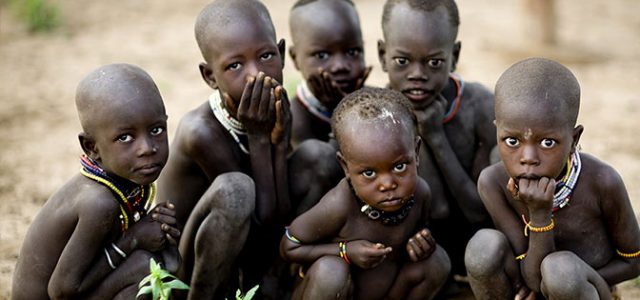
photo by African Holocaust
Slavery nowadays in Ethiopia
Ethiopia is a sad example of how this practice remained eradicated in the social system.
More the 400,000 Ethiopians are enslaved nowadays, according to the 2016 Global Slavery Index by the human rights group Walk Free Foundation. A lot of those people are internal migrants, persons that move from the rural areas to the more industrialized cities, such as Addis Ababa. The capital according to a study in 2010 by the world bank found out that more than 35 percent of the residents are people coming from the surrounding areas, most of
them there with the promise of better education, work, or healthcare but most of the time they end up working for free as domestic workers, this phenomenon mainly affects women and children. One of the problems is that exploitation is widely accepted by the Addis Ababa inhabitants because it is seen as the only way to prevent the city's economy not to collapse. Exploited people are not only seen as economically necessary to the
system but in most cases also socially marginalized because they are seen as impure.
The abolition process in Ethiopia had an arduous path. The first big step came 100 years ago, in 1923 when the Ethiopian emperor Hailé Selassié signed a document vowing to abolish slavery to join the League of Nations, albeit the practice was not completely eradicated.
Benito Mussolini used it as an excuse to invade Ethiopia in the 1930s, a move that Italian fascist propaganda portrayed as a "civilizing mission". After Ethiopia was freed from Italian rule in 1942, Haile Selassie signed a decree outlawing slavery. Even then, the practice persisted in some areas, and the former slave-owning aristocracy's power would not be
overthrown until the Revolution of 1974, which brought to power the Provisional Military Administrative Council, also known as the Derg, a Marxist-Leninist military junta that instituted land reforms.
Human trafficking
One of the consequences of Ethiopian history is the human trafficking of slaves son to all the bureaucratic gaps of the government such as inadequate laws, poor enforcement, ineffective penalties, corruption, complacency, and invisible operations. These factors are the reasons why the trafficking of human capital is so widespread in Ethiopia, the risks are nothing compared to the huge amount of money that a trafficker could earn doing his job.
Trafficking in persons is a form of modern slavery, violating the fundamental human rights of the people subjugated by this dreadful practice.
Types of modern slavery
Scholars defined different types of modern slavery, dividing it into three kinds. Slaves are either seized, born, or sold into slavery under the term "chattel slavery." The word "debt bondage" refers to an indefinitely-term service that is guaranteed in exchange for a monetary loan. The third type of slavery is called "contract slavery," in which contracts are
"legal fictions" rather than legally binding job contracts and hide the true terms of enslavement. The Ethiopians are classified as the third type of slavery because usually, they must follow a "bureaucratic" process. They must first obtain a visa using the "kafala" type of sponsorship, which legally ties them to their potential employers. Although it is permissible for both the employers or sponsors and the employees to breach their contracts, this is frequently only a ruse on paper. Ethiopian migrant workers are already wholly reliant on the goodwill of their employers under this system.

photo by The New Arab
Conclusion
The Ethiopian slave system is based mainly on women and children even younger than 10 years old, the situation is very critical. The government has been involved in many cases of abuse and has failed to protect the communities at risk. There is an urgency for a neutral protection force in Tigray, to establish trust in the people of the area and disincentivize future abuses since all communities of the area have serious concerns about protection, both immediate and medium-long term. Amnesty International and Human Rights Watch
are pleading with the warring parties to include the deployment of an AU-led peacekeeping mission with a serious civilian protection mandate in any peaceful settlement. Such a mission would only be dispatched if all sides to the conflict approved of its existence and
agreed to its mission objectives. The Ethiopian government and other combatants should also take note of communities' historical and present protection concerns.
SOURCES: THE GUARDIAN, THE ETHIOPIAN HERALD, THE REPORTER, UNITED NATIONS, HUMAN RIGHTS WATCH

Commenti
Posta un commento